Governance
Committees, examinations, and service delivery aligned to transparent procedure and consistent documentation.
Reimagining Higher Education Through Innovation, Governance, and Accountability.
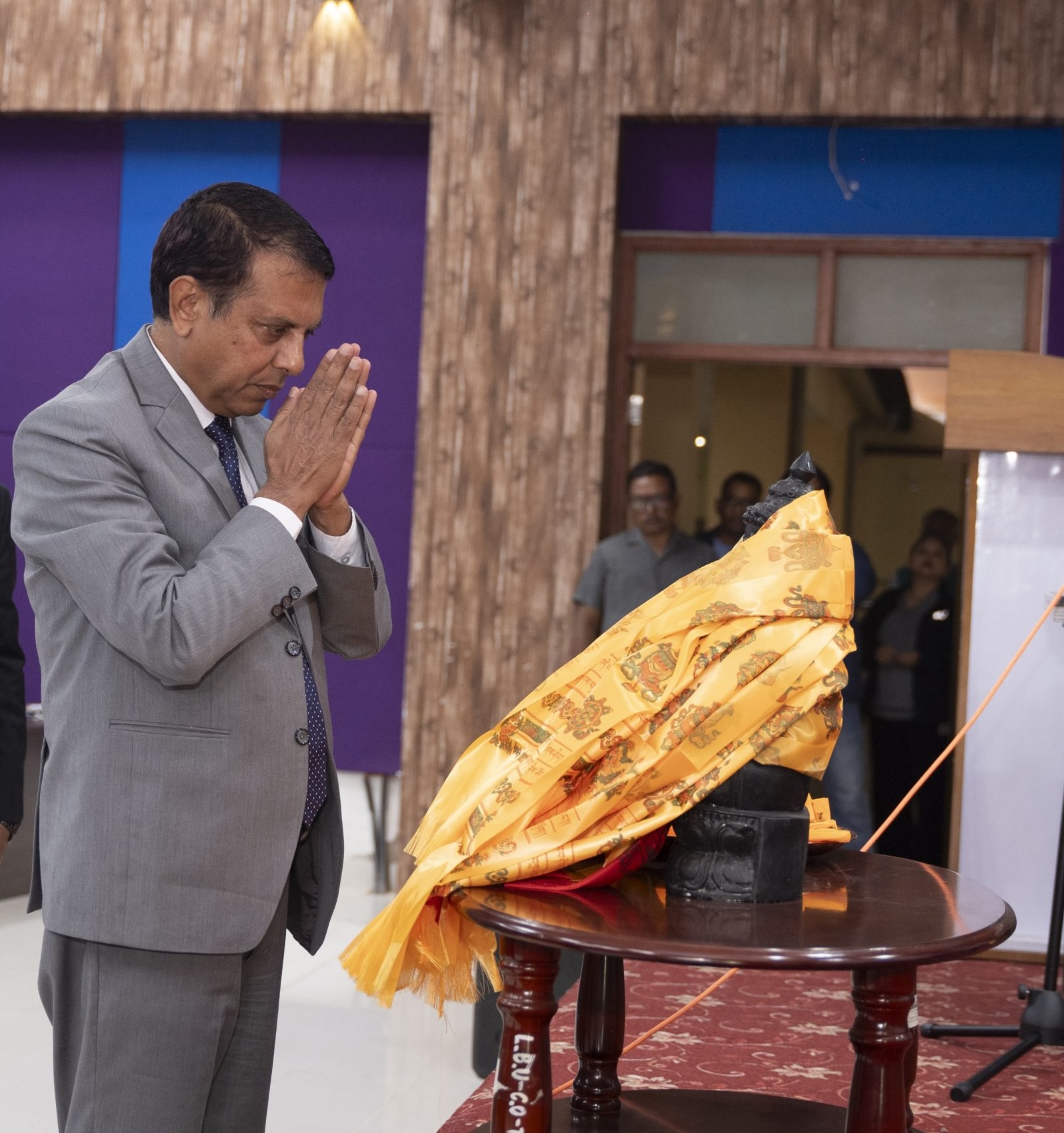 Photographed at Lumbini Buddhist University, 2025
Modernisation is treated as layered work: infrastructure, pedagogy, and governance moving together so technology supports accountability rather than spectacle.
Committees, examinations, and service delivery aligned to transparent procedure and consistent documentation.
Programme design, assessment, and graduate supervision grounded in classical sources and contemporary standards.
Peer-reviewed output and policy-facing notes on pedagogy, rights in Buddhist ethics, and higher education reform.
Dr. Acharya joined Lumbini Buddhist University in 2012 and has remained part of its faculty ever since. He is currently Associate Professor in the Faculty of Buddhist Studies.
He teaches at Lumbini Buddhist University, a federal institution located in Lumbini Province. His courses and graduate supervision span Mahayana, Theravada, and Vajrayana traditions, with particular attention to Applied Buddhism and the history of Buddhist pedagogy.
His published work examines the educational practices of the Buddhist era, the philosophical foundations of human rights in Buddhist thought, and the relationship between Buddhist political philosophy and the theory of the state.
He joined LBU in 2012 as Assistant Lecturer and served as Registrar from 2016 to 2026, including three consecutive terms in that office and a period as Acting Vice Chancellor. He completed his PhD in Buddhist Studies at LBU in 2019.
Formal training, in reverse chronology.
Teaching and institutional service across thirteen years at Lumbini Buddhist University.
Managed campus administration and academic operations during LBU’s formative years, establishing institutional routines for governance, student services, and programme delivery.
Three consecutive terms overseeing examinations, student records, accreditation readiness, and digital academic systems across all university bodies.
Served as Acting Vice-Chancellor on two separate occasions, providing institutional leadership and continuity of governance during transition periods.
Teaching career spanning over a decade at Lumbini Buddhist University.
Supported undergraduate teaching in Buddhist Studies, assisted in curriculum delivery, and contributed to the academic foundations of a newly established university.
Delivered lectures across Buddhist Studies programmes, supervised postgraduate research, and contributed to course development and departmental academic planning.
Teaching, research supervision, and academic leadership in the Faculty of Buddhist Studies, with focus on Applied Buddhism, pedagogy, and institutional reform.
Published work in Buddhist pedagogy, Applied Buddhism, and the philosophical foundations of Buddhist thought.
Six areas developed through more than a decade of teaching and research at LBU.
Designing governance models that connect statutes, senates, and delivery, without losing sight of student outcomes.
Identity, examinations, and records as accountable systems: audit trails, role clarity, and responsible digitisation.
From item banks to results integrity, building confidence in credentials the labour market and the public can verify.
Ethical frameworks for administration, rights discourse, and pedagogy recovered from classical sources.
Scholarship that informs policy choices rather than decorating them, especially in pedagogy and political philosophy.
Partnerships that expand academic capacity while preserving institutional sovereignty and academic standards.
On the relationship between classical learning and modern accountability.
“Strong institutions shape the future of nations. The task of leadership is not performance for cameras. It is the patient assembly of systems that students, faculty, and citizens can trust.”
That posture connects Buddhist pedagogical insight with contemporary demands for transparency, measurable delivery, and anti-corruption culture in public universities, without substituting slogans for evidence.