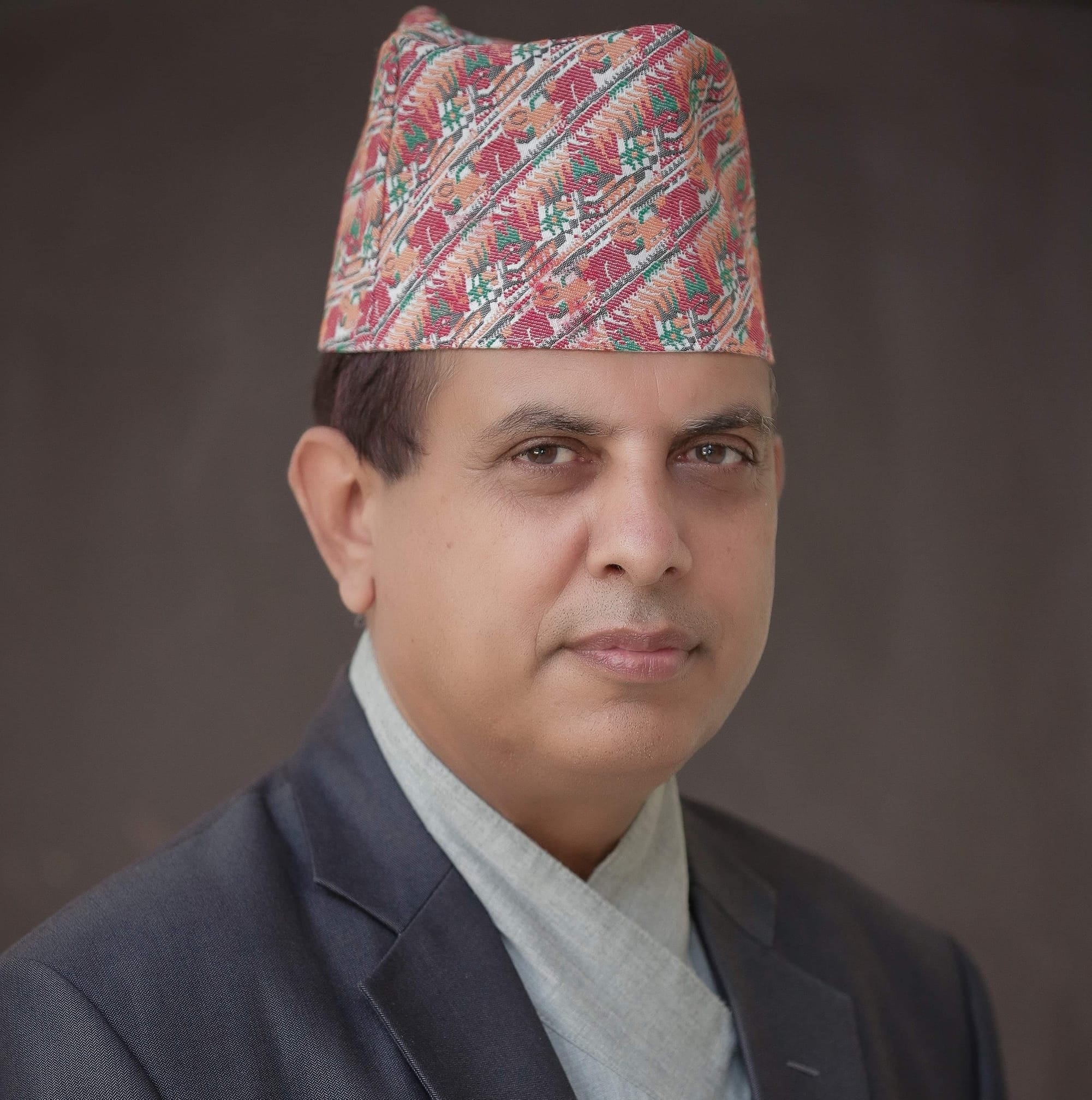
i. Foundations
Born in Arghakhanchi, Dr. Acharya pursued higher education in Kathmandu, completing a BA in Political Science and Journalism (2000), a Postgraduate Diploma in Buddhist Studies (2003), an MA in Buddhist Studies (2012), and a PhD in Buddhist Studies from Lumbini Buddhist University (2019). That sequence of public affairs, classical languages, and doctrinal depth shaped an approach to administration that treats policy, pedagogy, and primary sources as one fabric.
ii. Governance & delivery
From 2012 he served the Faculty of Buddhist Studies at LBU, rising from Assistant Lecturer to Associate Professor. In 2016 he was appointed Registrar, serving three consecutive terms through 2026, with a period as Acting Vice-Chancellor. The work centred on examinations, accreditation readiness, student records across affiliated campuses, and the disciplined introduction of digital systems, including computer-based testing and resilient assessment models during the COVID-19 period.
He relocated core administrative operations to the Lumbini campus so that governance could be proximate to students and communities. Under his registrarship the institution expanded its land base, diversified academic programmes, deepened international collaboration, and improved the timeliness and integrity of academic results, outcomes documented through the university’s own public reporting rather than self-congratulation.
iii. Scholarship & systems
His peer-reviewed scholarship addresses Buddhist pedagogy, Applied Buddhism, human rights in Buddhist ethical thought, and political philosophy. The through-line is practical: how classical insight informs contemporary institutions, especially where transparency, academic integrity, and public trust are at stake.
“Institutions earn legitimacy when processes are visible, decisions are traceable, and outcomes can be audited without embarrassment.”
iv. Stewardship
Whether in a seminar or a senate paper, he returns to sati (careful attention) as a discipline that applies equally to reading a canonical passage and to maintaining a transcript that a family will stake its future on. That posture is what modern universities require: calm authority, systems thinking, and the patience to deliver reform that outlasts any single headline cycle.